A Slow Look at a Performance Building’s Changing Memory
A slow look at a performance building’s changing memory helps you record traces of past use in its materials, repairs and public artwork without guessing.
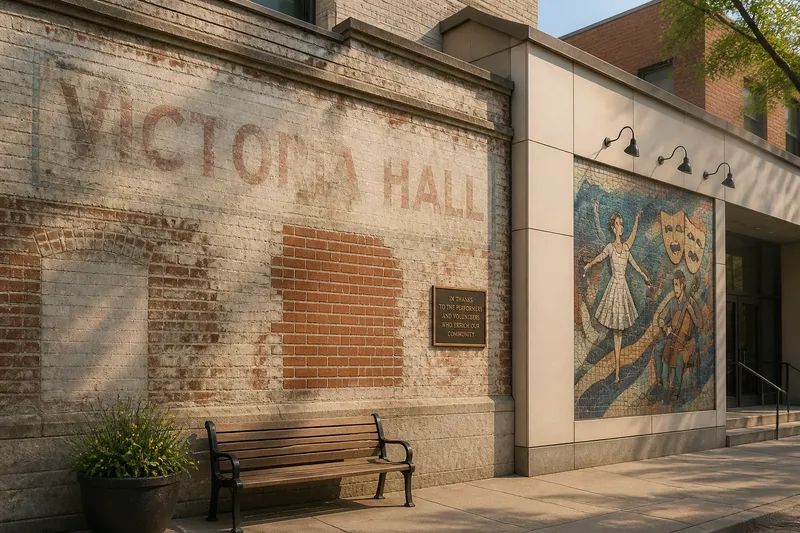
A repaired patch of brick can tell a performance building’s story more plainly than its grand sign. A slow look at a performance building’s changing memory begins with details that have endured: altered materials, layered paint, commemorative plaques and artwork that gives the site a place in local life.
This is a way to notice visible traces, not to establish a definitive history. Stay in public areas, respect signs and people’s privacy, and separate what you see from what you infer. The aim is to describe how a venue appears to have changed, while leaving its undocumented past open.
Read the building through its layers
Performance buildings gather alterations. A former cinema may retain a decorative ceiling after its auditorium has changed use. A theatre may have a newer extension beside older masonry. Look for differences in texture, colour and finish: brickwork that does not quite match, a blocked opening, a fresh coat of paint over an older surface, or a plaque set into a wall.
Such details can suggest repair or adaptation, but they do not explain when or why it happened. Note the visible evidence first. “A rectangular patch of newer brick interrupts the older wall” is more dependable than “the wall was rebuilt after a fire” unless a reliable source confirms that account.
Materials can also show how a place has been cared for. A polished handrail, weathered stone or regularly repainted timber reflects use and maintenance, though not necessarily the people responsible. Treat wear as a clue to contact with the building, not as a record of a particular event.
Look for public traces of local memory
Memorial plaques, carved names, mosaics and commissioned murals may connect a venue to performers, residents or events. Read the wording carefully, including dates and who is named. If a plaque credits an artist or funder, record that rather than assuming the work represents the whole neighbourhood.
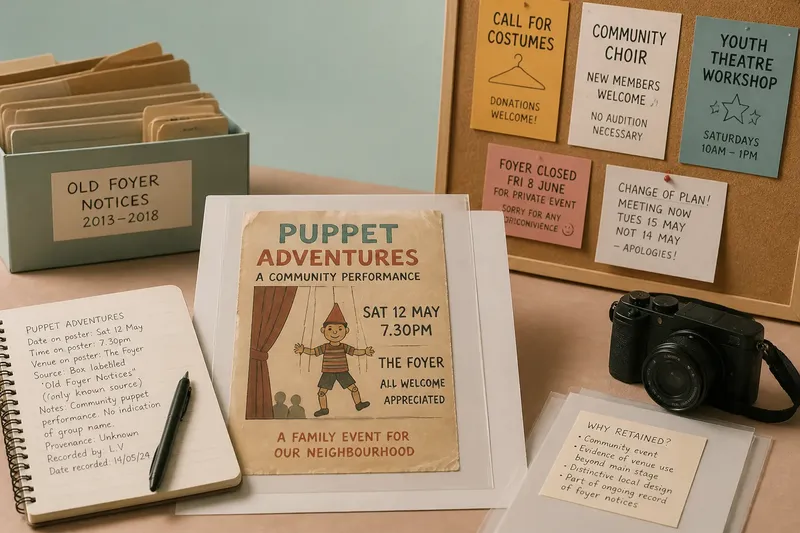
Temporary traces matter too. A display in a foyer window, a community notice or a poster preserved behind glass may show what the venue chooses to make visible at that moment. Its presence is evidence of a current display, not proof that it has always been there or that everyone locally shares its message.
Look from places open to the public. There is no need to enter a building, peer through windows or photograph private activity. If a plaque is unreadable from the pavement, leave the wording uncertain rather than stepping into a restricted area.
Separate observation from the story you tell yourself
A useful note has two parts: what is plainly visible, and what it might mean. Keep them distinct. “A painted sign sits beneath a newer canopy” records a relationship; “the sign was moved when the entrance changed” is an interpretation unless another source supports it.
For each detail, consider alternative explanations. A mismatched stone could mark an addition, a repair or simply a different supply of material. A mural might be recent, restored or part of a long-running programme. Your notes become stronger when they preserve those possibilities instead of choosing the most dramatic one.
Say you are looking at an invented neighbourhood hall with a faded painted name on its side wall and a bright new panel beside it. You write down the colours, the materials and where each sits. You then check the hall’s public history leaflet, which identifies the newer panel as a later commission but says nothing about the painted name. Your resulting note distinguishes the confirmed commission from the older sign’s unknown date.
Use a compact record to keep details useful
A pocket notebook or phone note is enough. Record the date and public viewpoint, describe the detail, and mark any interpretation as a question. If you consult a venue leaflet, archive display or local history collection, note its name so you can distinguish that information from your own observation.
- Check whether a surface visibly differs from the material around it; if it does, record the contrast without assigning a cause, but if it does not, move on to another trace.
- Check whether a plaque gives a name, date or credit; if the wording is readable, copy only the visible details, but if it is not, leave the text unresolved.
- Check whether a mural or display is permanent or visibly temporary; if its status is unclear, describe its present appearance, but if a public label explains it, record that wording as attributed information.
- Check whether your note states an observation or an inference; if it includes an unconfirmed cause, mark it as a possibility, but if the claim cannot be supported, remove it.
- Check whether a photograph would include identifiable people or private interiors; if it would, use a sketch or omit the image, but if the view is clear of both, frame only the architectural detail.
- Check whether a historic claim appears in a venue leaflet or public archive; if a source confirms it, record the source alongside the claim, but if no source supports it, keep the claim out of your account.
What is not worth the effort? Guessing the age of a building from its style alone, or treating every scar in a wall as evidence of a dramatic event. A modest description can preserve a detail without turning uncertainty into folklore.
How can you record a venue’s changing memory?
What details suggest that a performance building has changed?
Look for visible contrasts, such as a blocked opening, a newer extension, mismatched masonry or layers of paint. These can indicate alteration, but they do not reveal its date or reason on their own.
How can I check the story behind a plaque or mural?
Start with the wording on the work itself, then compare it with public material from the venue or a local archive. Attribute information to its source, and leave any unsupported detail uncertain.
Can I photograph historic details?
Usually, a photograph of a public-facing architectural detail is a straightforward way to help you remember it. Avoid identifiable people, private interiors and photography where signs or staff directions prohibit it.
What if I cannot tell whether a feature is old or new?
Describe what you can see rather than dating it. “The sign is faded and sits below a newer-looking panel” remains useful even when the feature’s history is unknown.
Leave room for what the building does not reveal
A performance building’s changing memory is not confined to an official timeline. It can be glimpsed in repaired surfaces, public tributes and the way older details remain beside newer ones. Record the evidence, name your sources and keep open questions open; that restraint makes the visible history more useful to anyone who encounters it later.