Brick, Timber or Stone: What a Facade Can Tell You at a Glance
Brick, timber or stone facades reveal clues about texture, upkeep and a venue’s character—without pretending that a glance can tell its whole history.
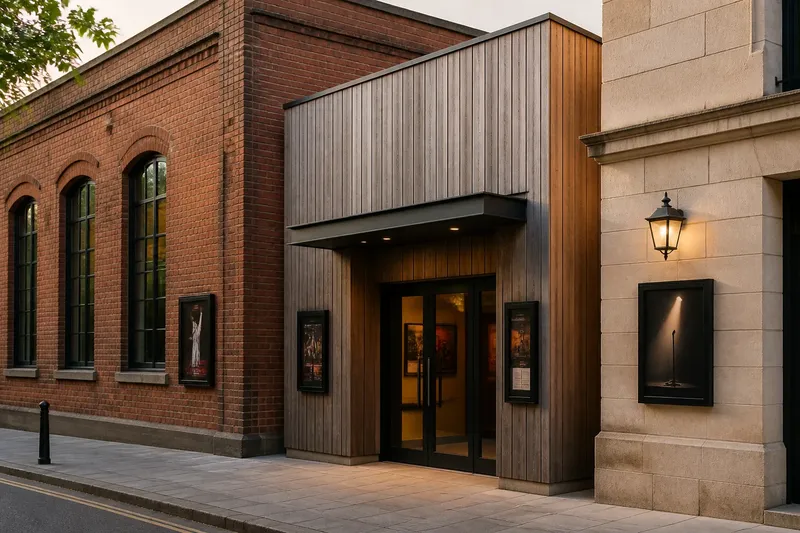
A brick wall outside a performance venue catches light differently from timber boards or pale stone, and that first impression can tell you something useful about the building’s surface, upkeep and public character. Brick, timber or stone is a good starting point for reading a facade: notice what the material does, then separate visible clues from guesses about the past.
Start with the surface you can actually see
A facade is more than a material sample. It is the building’s public face: the surface around doors, windows, signs and places where people gather before a performance. Its texture shapes how the venue meets the street, even when the auditorium behind it is hidden.
Begin with three simple observations. Is the surface made of repeated units, long boards or large blocks? Does it look smooth, rough, glossy or weathered? And where does it change—around an entrance, beneath a canopy, or between an older wall and a newer addition?
These details are more reliable than an instant story about the building’s age. A facade may have been repaired, covered, extended or altered for a new use. What looks like one continuous material can conceal several phases of work.
Brick facades make pattern part of the character
Brick is built from many small units, so its appeal often lies in the way those units gather into a larger pattern. Look at the bonds, the lines of mortar and any changes in colour. A regular wall can feel calm and grounded; contrasting bricks or decorative courses can give a venue a more animated street presence.
Mortar is part of the visual reading, too. Deep joints can make the wall appear strongly gridded, while flatter joints leave more emphasis on the brick faces. Crumbling or missing mortar may be a sign that the surface needs attention, but a passer-by cannot tell from appearance alone what repair is needed or how extensive it should be.
Brickwork also makes alterations easier to spot. A filled opening, a patch of different brick or a change in bond can indicate that the facade has been adjusted. It does not reveal why. A former window, a service opening or a repair might each leave a similar mark.
Timber facades show grain, joints and weather
Timber gives a facade a more legible sense of direction. Boards may run vertically, horizontally or in overlapping courses, and their joints create a rhythm that changes with the viewing angle. Grain and knots make the surface less uniform than brick or stone; paint can soften that variation or make the boards read as crisp bands.
Weather is especially visible on exposed timber. Fading, peeling paint, dark marks near joints and uneven edges are clues to the surface’s present condition, not a complete account of the structure behind it. A protective coating may hide the grain, while a naturally weathered finish may be part of the intended appearance.
Timber’s character can suit a venue that wants to feel approachable or closely connected to its street. But that impression is not proof that the building is informal, temporary or recent. The material might belong to a small entrance addition, a screen in front of another wall, or a larger composition that uses several finishes.
Stone facades make weight and detail visible
Stone often reads as solid because the eye registers broad faces, crisp edges and deep shadows around joints. The effect varies with the stone’s colour, finish and scale. A roughly dressed surface scatters light; a polished one reflects it. Carved details can draw attention to an entrance, while plain courses let proportion and mass carry the design.
Look for how the blocks meet, whether the surface is even, and how water appears to move across it. Staining beneath ledges or around openings can help you see where rain collects or runs. Such marks are observations, not a diagnosis: their cause may depend on details that cannot be inspected from the pavement.
Stone is not automatically old, just as brick is not automatically local or timber automatically lightweight. A modern facade can use stone, and an older venue can wear a later stone facing. The visible material tells you what the surface presents, not necessarily what supports it or when it was installed.
Compare the materials by the clues they offer
Each material makes different details easy to notice. Brick foregrounds repeated units and mortar; timber foregrounds grain, board direction and coating; stone foregrounds block size, finish and the depth of joints. That is a comparison of visible character, not a ranking of quality.
- Texture: Brick tends to read as a field of small faces; timber as lines and grain; stone as broad planes or worked surfaces.
- Pattern: Look for bond and mortar in brick, board layout in timber, and course lines or block shapes in stone.
- Upkeep clues: Note loose-looking mortar, peeling coatings, stains or damaged edges without deciding from the street what repair is required.
- Architectural character: Ask how the surface supports the entrance, sign, windows and overall shape rather than judging the material alone.
It is not worth the effort to identify a precise stone type or timber species from a quick pavement glance. Light, paint, dirt and distance can all disguise the answer. The more useful question is what the surface is doing visually and where it appears to change.
Read the whole facade, not a single patch
Material becomes more revealing when you follow it across the building. Does the same finish continue around a corner? Does a different surface mark the entrance, or does a canopy interrupt the wall? A change may be a deliberate way to make the doorway legible, a practical repair, or part of an addition. The pattern gives you a question to investigate, not a conclusion.
Imagine you pass a small venue with a brick street front and a timber-clad box around its entrance. The brick appears consistent beside the windows, while the boards stop at the doorway. You can reasonably observe that the entrance is visually distinguished from the main wall; you cannot establish from that contrast whether the timber is newer, temporary or part of the original design.
Signs, lighting and posters also affect the reading. A large banner may obscure a change in brickwork, while a bright doorway can make a modest material contrast seem more dramatic. If you want to notice the facade itself, look at it from more than one position and distinguish the wall from what has been mounted on it.
What can a facade tell you at a glance?
Can you tell how old a building is from its facade?
Not reliably. Materials and patterns may offer clues, but repairs, extensions and replacement surfaces can make different periods appear together.
Does a brick, timber or stone exterior reveal what is behind it?
No. A visible finish may sit over another material or cover a structure that cannot be seen from outside. Treat the facade as evidence of its outer surface, not a complete view of the building.
What should you notice first when comparing materials?
Start with texture, joints and the way the finish meets doors, windows and corners. These features are easy to observe and less speculative than assigning a date or purpose to a patch.
Can weathering show whether a facade needs repair?
It can draw attention to areas that look worn, stained or damaged, but appearance alone cannot establish the cause or the right remedy. Where a building concern matters, assessment belongs with a suitably qualified professional.
Let the material be a clue, not a verdict
Brick, timber and stone each offer a different visual vocabulary, and a venue’s facade uses that vocabulary alongside its openings, signs and form. Read the joints, grain, courses and changes of finish. Those details can sharpen your sense of the building’s character without pretending to reveal its full history.
For a quick reading of a performance venue, begin with the surface and then widen your view to the whole street-facing composition. The most useful clue may be the boundary between two materials, not the material that first caught your eye.