The Accessible Entrance Is Not Always the One You Notice First
Accessible entrance information can help visitors plan around a venue’s layout, shared spaces and door arrangements before they arrive for a performance.
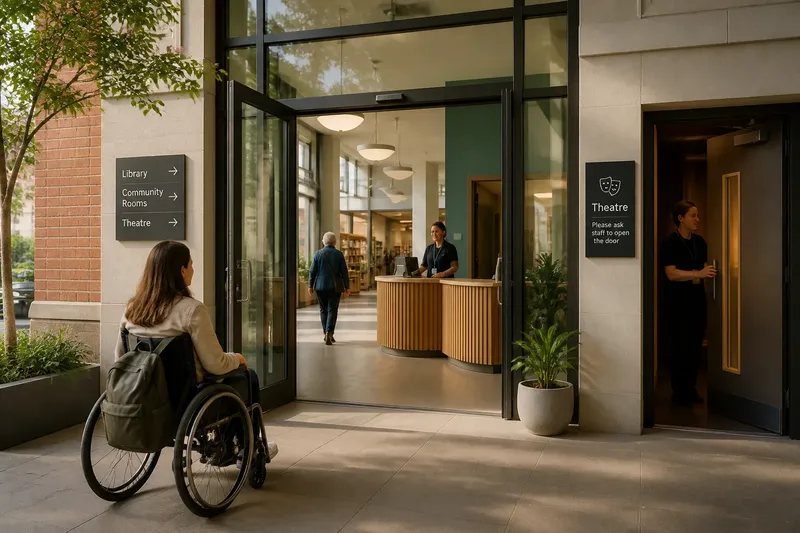
An accessible entrance can be easy to miss when it sits within a shared building or a busy street frontage. At a performance venue, that can leave visitors unsure not only which door to use, but whether the building’s public life extends to the space beyond it.
Good access information describes the relationship between the venue and its surroundings: who controls the entrance, what is shared, and what happens once a visitor crosses the threshold. That context matters as much as the door’s location.
Accessible entrance information should explain the building’s boundaries
A theatre may occupy a room inside a library, community centre, shopping arcade or historic hall. Its entrance may be shared with other tenants, and the route beyond the street door may pass through a lobby that does not look like part of the venue.
Name the building and the venue separately when that distinction could cause confusion. Say whether visitors enter through the shared building entrance or a door reserved for the performance space. If a lobby is open to the public but the theatre doors are managed by staff, explain where the venue begins and where to ask for help.
This is not merely a matter of better directions. It tells a visitor whether they have reached the right organisation, whether they may wait in the shared area, and who is responsible for the next part of their visit.
Shared entrances call for clear information about responsibility
In a multi-use building, access arrangements can depend on more than the venue itself. A landlord, council, neighbouring business or building manager may control the outer door, lift, reception or opening hours. Visitors need to know which parts of the route are available and who can respond if something changes.
- Check the outer door: If it is usually open during performances, state that; if it is locked or staff-operated, explain how entry works and identify the contact point.
- Check the shared lobby: If visitors can wait there, name it as a waiting space; if it closes before the performance area opens, say where to wait instead.
- Check the lift or platform arrangements: If access depends on building staff, say who arranges it and how visitors can make contact; if the venue cannot confirm availability, direct visitors to speak with the venue before travelling.
- Check signage from shared areas: If the venue name is visible at the decision point, visitors can continue; if it is not, add a sign or give a recognisable landmark and a clear next action.
- Check what happens after the venue closes: If the shared entrance is locked while visitors are still inside, explain the exit arrangement; if responsibility is unclear, agree on a procedure with the building manager before publishing instructions.
- Check changes for a particular event: If construction, a private function or a building schedule alters the usual arrangement, notify ticket-holders and update signs at the affected point; if the change cannot be described clearly, provide a named staff contact.
Not every visitor needs a full account of building management. It is not worth publishing a long list of internal departments or repeating the same contact details in several places. Give the information that affects a visitor’s decision, and name one useful point of contact when responsibility is divided.
Accessible entrance decisions depend on more than the door
A step-free entrance can still be difficult to use if the route through a shared foyer is blocked by furniture, if a security desk treats visitors as unexpected, or if the internal door is kept locked without an obvious way to request entry. Describe relevant conditions plainly rather than relying on a broad label such as “accessible”.
Where details depend on a visitor’s needs, invite them to contact the venue and be ready to discuss the actual layout. Staff can explain the entrance, the threshold, the shared spaces and any assistance available without asking someone to guess which detail might matter.
Say you manage a small theatre in a public library. The library’s street door is step-free, but the performance room opens only after a duty worker releases a second door. Your published information names the library entrance, says the theatre door is staff-operated, and gives the venue’s contact method. A visitor can then decide whether to ask about the arrangement before setting out, rather than arriving at an unexplained locked door.
What do visitors need to know about a shared venue?
Should the venue say who controls the entrance?
Yes, if control affects entry, opening times or assistance. Identify the relevant staff role or contact point in visitor-facing terms, rather than expecting people to know the building’s internal structure.
What if the venue shares a lobby with other organisations?
Explain whether visitors may enter and wait there, and how they can recognise the performance venue from that space. If access to the venue’s own rooms is managed separately, make that distinction clear.
How should a venue describe a lift or other shared facility?
State what visitors need to know about access and who can confirm current arrangements. If availability depends on another organisation, avoid implying that the venue controls it; advise visitors to contact the venue for specific details.
What should change when the shared building alters its arrangements?
Update the information visitors will actually use, including event messages and signs at affected entrances. If the revised route or staff handover remains uncertain, settle those details with the building manager before directing visitors there.
Keep access information consistent across the venue and its neighbours
Information can become confusing when a venue’s website says one thing, a shared-building notice says another, and front-of-house staff give a third version. Agree on a short description with the building manager, then use the same core details in ticket messages, access pages and staff briefings.
When a temporary arrangement changes, make clear which organisation is communicating it and where visitors can ask a follow-up question. If the building is hosting several events, name the performance venue rather than referring vaguely to “the hall” or “the entrance”.
A useful description makes the venue’s boundaries visible without making visitors carry the burden of working them out. Accessible entrance information is strongest when it reflects the real partnership behind the door: the venue, the shared building and the people responsible for helping visitors belong there.